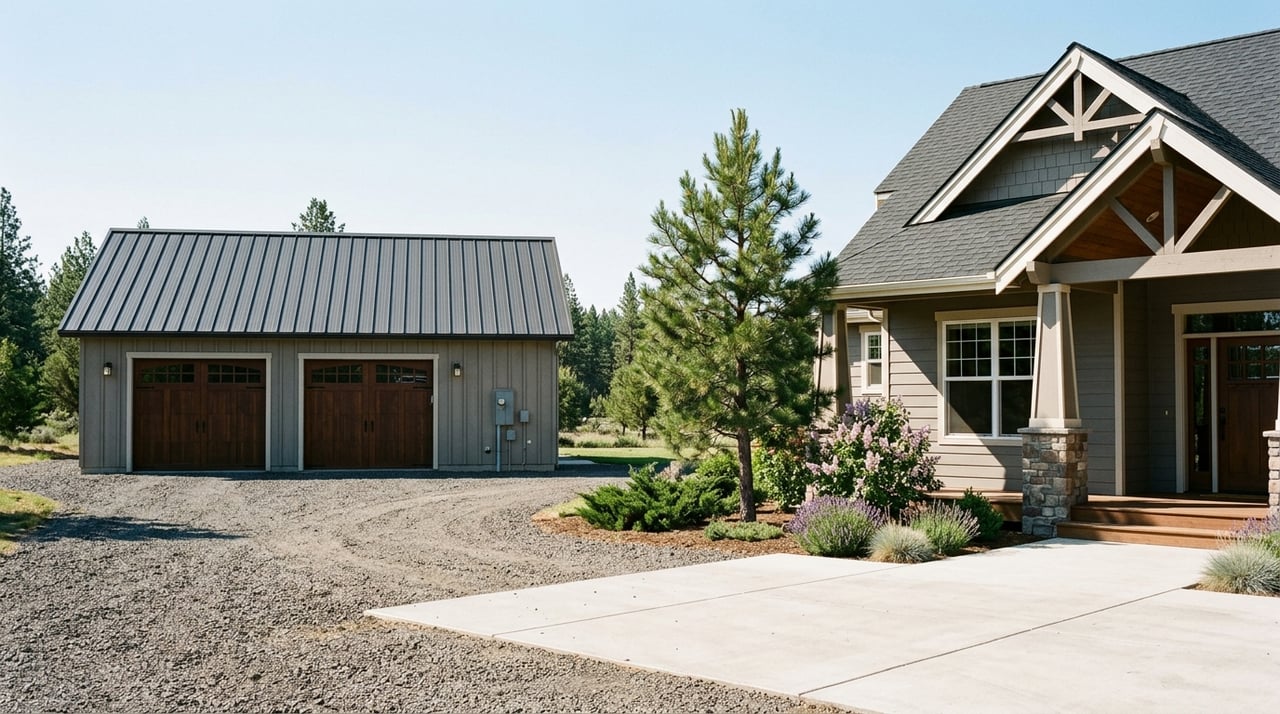
If you have been thinking about buying land near Walla Walla wine country, you already know the appeal is easy to see. Between vineyard views, open agricultural land, and quick access to downtown Walla Walla, this area attracts buyers who want space, lifestyle potential, or a future building site. The key is knowing that a beautiful parcel is not always a buildable one, and that is where careful research matters most. In this guide, you will learn the main land-buying checks to make before you move forward. Let’s dive in.
Why Walla Walla land gets attention
The Walla Walla Valley AVA is one of the region’s biggest draws. According to the official AVA profile, the appellation surrounds Walla Walla, spans Washington and Oregon, and has the highest concentration of wineries in Washington. The same profile notes 2,933 acres under vine, varied soils, and annual precipitation ranging from 9 to 22 inches.
That wine-country identity sits within a county that is still deeply agricultural. Walla Walla County hazard-planning material cites the 2017 Census of Agriculture and reports 903 farms on 702,537 acres, which is about 86% of the county’s land area, with irrigation on roughly 14% of farmland. That context matters because it helps explain why buyers often find a mix of vineyard land, farm ground, rural residential parcels, and acreage homesites in the same broader market.
Walla Walla also offers a lifestyle component that can increase interest in nearby land. The official tourism page highlights walkable downtown access to hotels, restaurants, shopping, and arts, along with nearby parks, golf, and Blue Mountains recreation. While amenities can make an area more appealing, they do not replace the need to confirm zoning, access, utilities, and site constraints.
Start with intended use
Before you fall in love with a parcel, get clear on what you want it to do for you. Are you hoping to build a primary home, create a hobby farm setup, hold land as a long-term investment, or explore a small development opportunity? Your intended use should guide every question you ask from the start.
A parcel near wine country may look ideal for a custom home or small acreage lifestyle, but the rules can change depending on where it sits. The first major checkpoint is whether the land is inside Walla Walla city limits, in the urban growth area, or in unincorporated county land. That one detail affects which agency handles permits, land-use review, and building requirements.
Check city, UGA, or county status
If the parcel is inside the city, the City of Walla Walla Development Services Department handles building and land-use permitting, environmental protection, critical areas, shoreline regulations, and planning matters. If the land is in unincorporated county areas or the urban growth area, county Community Development handles zoning, building permits, inspections, reviews, and code compliance.
This matters because land-use rules are not one-size-fits-all. A buyer who assumes county-style flexibility on a city parcel, or city utility access on a rural parcel, can run into expensive surprises. Before you write an offer, confirm exactly which jurisdiction applies and what approval path your plans may require.
If you are considering land inside the city, it is also worth knowing the regulatory backdrop is evolving. The city says it must update its comprehensive plan by December 2026 and adopt middle-housing regulations by June 30, 2026, and it notes that its Neighborhood Residential zoning allows up to four dwelling units per lot in areas where that zoning applies. You can review that framework through the city’s comprehensive plan project page.
Understand zoning before you buy
Zoning should match your intended use as closely as possible. In county areas, staff reports describing Rural Residential zoning say the district is meant to serve as a transition or buffer between rural development and higher densities. Those reports note that typical uses include small-scale farms, dispersed single-family homes, recreation, and other uses that do not require urban services.
That description is helpful for land buyers because it shows how officials may view a parcel in practical terms. A site that works well for a home with some acreage may not be suitable for a more intensive project. Looking at zoning early helps you avoid buying land for a use that may never be approved.
Prioritize legal access
Access can make or break a land purchase. A parcel may look reachable on a map, but you still need to confirm legal and physical access that fits your intended use. This includes checking where the approved access point is located, how many approaches are allowed, and whether the site can meet county standards.
According to the county access permit materials, access to building lots is limited to the approved location, parcels may have a maximum of two approaches, and county standards set width limits for residential, commercial, industrial, and farm approaches. County road standards also call for at least 75 feet between approaches.
That may sound technical, but it affects real-world usability. If your planned driveway location does not meet standards, or if terrain and road frontage create problems, your project could become much harder and more expensive. Walla Walla County maintains a large road system, with hazard-planning material reporting 960 miles of county roads and 180 bridges, but every parcel still needs its own access review.
Verify water availability
Water is one of the biggest land-buying questions in this market. If you are looking at land inside the city, public water may be part of the equation. The city reports that most of its drinking water comes from the Mill Creek watershed, with wells as backup, and says that supply meets or exceeds EPA and Washington Department of Health standards on its water system page.
Rural parcels require a different level of review. The Washington State Department of Ecology guidance cited in the research shows that surface-water use always requires a water right, and groundwater use beyond small exempt quantities also requires a water right. If you are unsure what applies to a parcel, Ecology recommends a pre-application consultation.
In short, never assume that because nearby land is developed, your parcel has the same water options. Water availability and legal water use are separate issues from basic buildability. You want both answers before moving ahead.
Review well and septic feasibility
For many rural and edge-of-town parcels, private well and septic feasibility are central to the decision. If a property will not connect to city utilities, you need to know whether it can support these systems based on site conditions and local review.
The Washington Department of Health states that private-well transactions in most counties may require water-sampling results, which is important if an existing well is part of the sale. On the septic side, the county’s onsite sewage system program issues permits, inspects final installations, and investigates septic complaints. The city also directs septic-related issues to the county health department.
Groundwater quality is another reason to slow down and verify details. County hazard-planning material says the shallow gravel aquifer near Walla Walla, College Place, Touchet, and Lowden is vulnerable to contamination from urban runoff, agricultural chemicals, or leaking septic systems. That does not mean a parcel is unsuitable, but it does mean testing and due diligence matter.
Watch for critical areas
Some of the most attractive parcels also come with site constraints that affect cost, layout, and timing. County critical-areas materials say reviews may involve critical aquifer recharge areas, geologically hazardous areas, wetlands, and flood areas. In some cases, a critical-area report from a qualified professional may be required.
That review can add time and expense, especially if you need studies, revised site plans, or additional setbacks. County materials also show that site plans may need to identify buildings, setbacks, roads, easements, access, driveways, parking, fencing, and topographic features. This is one reason vacant land should never be evaluated on price per acre alone.
Consider airport overlay rules
Location near the airport can introduce another layer of review. City code describes an Airport Approach overlay zone intended to protect runway approaches at the Walla Walla City-County Regional Airport from land uses and structures that could impair runway use. You can review that directly in the city code for the airport approach overlay.
If a parcel is anywhere near that corridor, it is smart to confirm whether the overlay applies and how it may affect structures or site planning. This is another example of why parcel research should go beyond listing photos and tax records.
Expect multi-department review
Land purchases often involve more moving parts than buyers expect. County project files show that building staff review applications for code compliance, conduct inspections, and coordinate with fire, law enforcement, water, sewer, and other agencies. Community Development, Public Works, and Health Department review may all play a role depending on the parcel and your plans.
That does not mean buying land near Walla Walla wine country is unusually difficult. It means the smartest buyers treat due diligence as part of the investment. If a parcel offers legal access, feasible water and septic options, and zoning that supports your goals, you are in a much stronger position.
A practical checklist for buyers
As you compare land options near Walla Walla wine country, keep your focus on the basics first:
- Confirm whether the parcel is in the city, UGA, or unincorporated county
- Verify zoning and whether it supports your intended use
- Review legal road access and access permit requirements
- Investigate water availability and whether water rights may apply
- Check well and septic feasibility
- Ask about critical areas, flood areas, or geologic concerns
- See whether airport overlay rules affect the parcel
- Understand which departments or agencies will review your project
A parcel with scenic views and a strong location can still be a great opportunity, but only if the fundamentals work. In this market, buildability and compliance usually matter more than scenery alone.
If you are exploring land and acreage opportunities in Walla Walla or nearby wine-country markets, working with a local broker who understands parcel questions can save you time and help you focus on viable options. When you are ready to talk through your goals, connect with Lee Davidson for responsive, hands-on guidance.
FAQs
What should you check first when buying land near Walla Walla wine country?
- Start by confirming the parcel’s jurisdiction, zoning, intended use fit, legal access, and basic water and septic feasibility.
Does land near Walla Walla wineries always have building potential?
- No. Desirable location and views do not guarantee buildability, because access, utilities, zoning, and site constraints still need to be verified.
How do water rights affect rural land near Walla Walla?
- Surface-water use requires a water right, and groundwater use beyond small exempt quantities also requires a water right, so buyers should confirm what applies to the parcel.
Are septic and private wells common for land near Walla Walla?
- Yes, many rural parcels may rely on private wells and onsite septic systems, which is why testing, permitting, and feasibility review are important.
Can zoning rules change for land inside Walla Walla city limits?
- Yes. The city is updating its comprehensive plan and middle-housing regulations, so buyers should review current city guidance for parcels inside city limits.